Bless This Kitchen: A Designer's Review for Embroidery
As a designer who spends more time staring at stitch simulations than I do actually cooking, I approach every new digital embroidery file with a healthy dose of skepticism. We have all been there: you download a cute graphic, convert it, and suddenly your machine is throwing errors or the satin stitches are so dense they turn your fabric into cardboard. So, when I came across the Bless This Kitchen - Funny Kitchen SVG, I didn't just look at the preview image. I wanted to know how this design would actually behave under the needle, especially for those of us running a craft business where reputation hinges on the quality of the finished product.
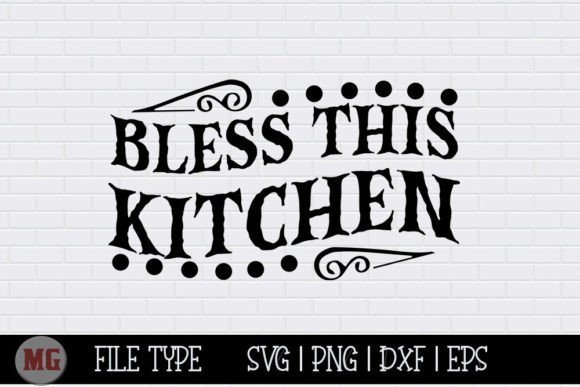
The first impression of this design is its playful, unpretentious vibe. It fits squarely into that popular "modern farmhouse" aesthetic that dominates kitchen decor, but the "funny" element suggests it has enough personality to stand out on social media feeds. Visually, the layout seems balanced, likely featuring bold lettering paired with whimsical iconography like utensils or steam lines. For an Etsy seller or a boutique owner, this kind of visual personality is gold. It speaks directly to the home cook who takes their hobby seriously but doesn't take themselves too seriously. However, seeing the Graphics in SVG format is only half the battle. The real test is translating those vector lines into thread.
Real-World Application: The Apron Test Case
To truly evaluate this asset, I imagined a specific real-life scenario: a custom order for a local culinary school graduation. The client wanted personalized gifts for a group of twelve students. The chosen item was a heavy-duty cotton canvas apron. This is a perfect use case for the Bless This Kitchen - Funny Kitchen SVG. Canvas provides a stable base, which is crucial for maintaining the integrity of any text-based design.
In this context, the design acts as a centerpiece. If the SVG converts well into a machine embroidery design, the result should be crisp. I would likely approach this as a combination of fill stitch for larger graphical elements and satin stitch for the borders or smaller details. The humor in the design relies on readability; if the lettering is too small or the stitch density is too high, causing the threads to merge, the joke gets lost. On a thick fabric like canvas, you have the luxury of using a heavier weight thread, perhaps a 40-weight rayon or polyester, to make the colors pop against the neutral background. This transforms a simple handmade product into a cherished keepsake that the recipient will actually wear while cooking.
Versatility Across Products and Fabrics
Beyond aprons, this design has significant potential across various custom apparel and home goods. Imagine this stitched onto a linen tote bag design for a grocery run, or centered on a flour sack towel. The latter is a classic personalized gift idea. However, flour sack towels are tricky. They are thin and often loosely woven. Here, the simplicity of the Bless This Kitchen - Funny Kitchen SVG becomes a major advantage. Complex designs with tiny details tend to get lost or cause puckering on thin fabrics. A design with clear shapes and moderate detail levels, which this appears to be, is much safer.
For sweatshirt embroidery, the stakes change slightly. Knit fabrics stretch, and if the design is too dense or lacks proper underlay, it will crack or distort after the first wash. If you are planning to use this for a cozy kitchen crewneck, you must ensure the digitized version (converted from the SVG) accounts for fabric stretch. You might need to reduce the stitch density in the fill areas to allow the fabric to breathe and move. Similarly, for baby embroidery projects, such as a bib for a future chef, softness is paramount. You would want to avoid heavy backing and ensure no scratchy threads are left on the backside.
The inclusion of EPS and DXF files in the zip package is a thoughtful touch for us designers. While the SVG is great for cutting machines or quick imports into embroidery software, having the EPS allows for precise editing in vector programs like Illustrator before digitizing. This ensures that if you need to tweak the spacing between words or simplify a corner for better stitching, you have the source data to do so. This flexibility is essential for creating unique design assets that don't look like everyone else's.
Technical Considerations and Potential Pitfalls
While the design concept is strong, there are areas where caution is required. If you intend to place this on a curved surface, like a cap or a structured hat, the layout needs to be arched digitally before stitching. Flat designs rarely look good on domed surfaces without distortion. Furthermore, if you are working with dark fabrics, you need to consider the thread contrast. The "funny" aspect might rely on specific color pairings that work on white but vanish on navy blue. Always run a black-and-white mockup to check the value contrast before committing to the hoop.
Another critical factor is the hoop size. Although the file formats (SVG, PNG, EPS, DXF) suggest scalability, your physical embroidery machine has limits. If the design is large, you may need to split it or use a jumbo hoop. Conversely, if you try to shrink it down for a small pocket on a chef's coat, you risk losing the legibility of the text. Tiny lettering is the enemy of embroidery; if the strokes become thinner than the width of a standard satin stitch column, the design will fail. Always check the minimum recommended size if provided, or test it on scrap fabric first.
Stabilizer choice cannot be overlooked. For a kitchen-themed item, durability is key. These items will be washed frequently and exposed to heat and moisture. Using a cut-away stabilizer rather than tear-away is often the smarter choice for long-term wear, ensuring the embroidery project holds its shape over time. This attention to construction details is what separates a hobbyist item from a professional small shop product.
Final Verdict for Commercial Use
From a commercial standpoint, the Bless This Kitchen - Funny Kitchen SVG offers solid value. It taps into a perennial niche—kitchen humor—without being overly trendy to the point of dating quickly. For commercial embroidery ventures, consistency is everything. Because this is a vector-based graphic, you have control over the final digitization. You aren't locked into a pre-digitized file that might have poor pull compensation or bad jump stitches. You can optimize it specifically for your machine and your preferred thread brands.
However, a word of advice regarding licensing: always double-check the terms included in the download. Just because a file is labeled for Crafts doesn't automatically grant unlimited commercial rights for resale as a digital file versus a physical good. Ensure you are compliant before listing finished items on your online store.
In conclusion, this design is a versatile contender for your library. Whether you are creating holiday embroidery gifts for family or stocking inventory for a spring craft fair, the Bless This Kitchen - Funny Kitchen SVG has the right balance of charm and practicality. Just remember, the SVG is only the blueprint. The true artistry comes from how you translate those lines into thread, choosing the right fabric, and respecting the limitations of the hoop. With careful preparation and a test run on scraps, this design can elevate your brand consistency and deliver a finished product that brings a smile to anyone who sees it.